Can You Get a Bacterial Infection From Well Water in Cedarburg?
How bacteria reach a private well, who is most at risk, and when a simple repair is enough and when your home needs ongoing treatment.
Can you get a bacterial infection from well water?
Yes. A private well can carry bacteria such as E. coli that cause stomach cramps, diarrhea and vomiting, and the risk is highest for infants, older adults and anyone with a weakened immune system. Most wells stay clean, but contamination usually brings no change in taste, smell or color, so it can go unnoticed.
Which bacteria turn up in private wells?
Labs usually look first for total coliform bacteria. Most coliforms are harmless on their own, but they live in soil and surface water, so finding them means something from the surface has found a way into your well. It is an early warning that the seal around your water supply is not doing its job.
The bigger concern is E. coli, which comes from human or animal waste. A positive E. coli result points to a sewage or manure source, and that is when the more serious stomach illnesses become possible. Other germs that travel with waste, including some viruses and parasites, can arrive by the same path.
How do bacteria get into a well?
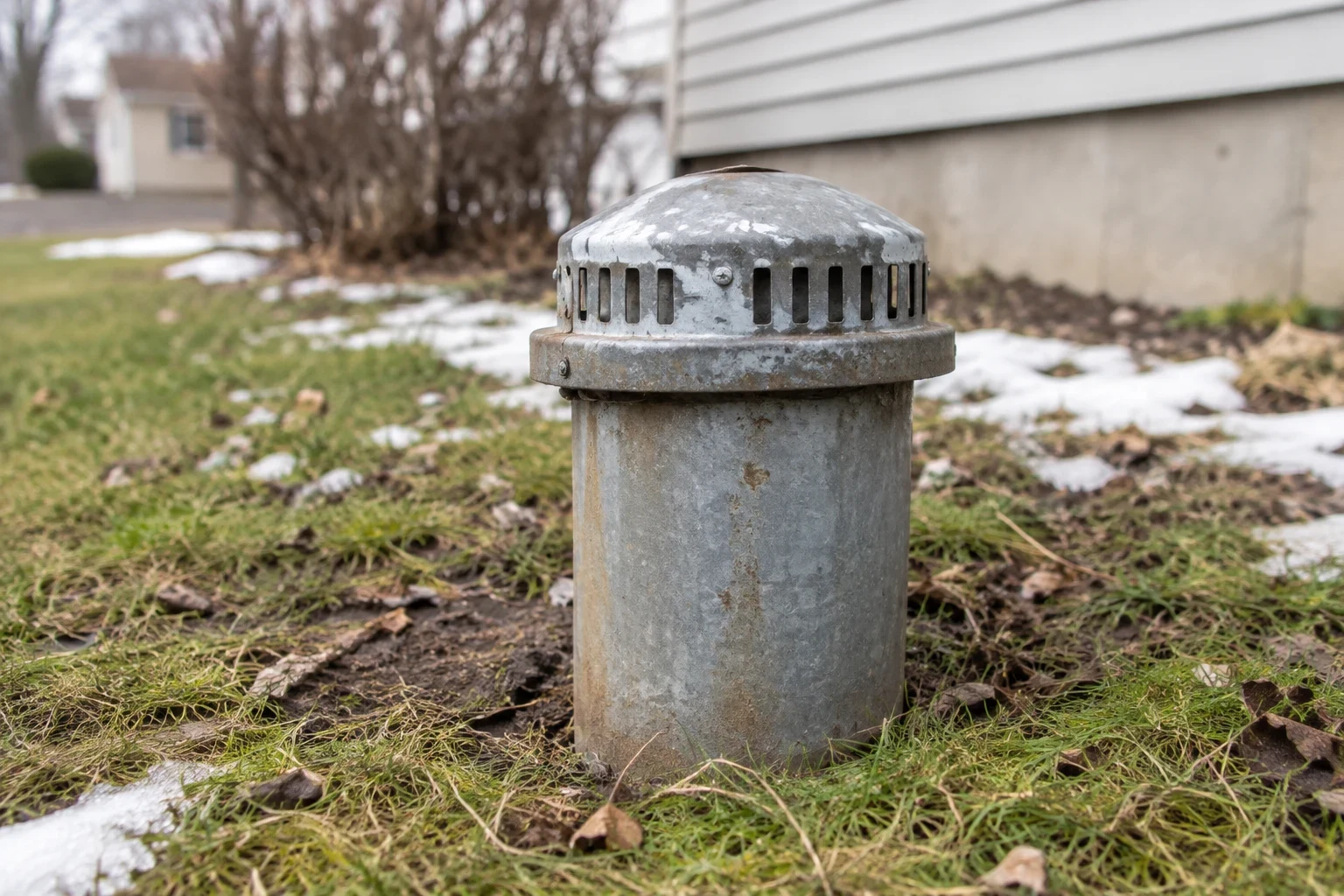
Groundwater deep in the ground is usually well protected. Trouble tends to start at the top of the well, where surface water can slip past a worn part or run down the outside of the casing. In southeast Wisconsin, spring snowmelt and heavy summer storms push more surface water toward wells than any other time of year, which is why many positive results show up in those seasons.
The common entry points are ordinary and often fixable:
- A cracked or loose well cap, or a missing vent screen that lets insects and small animals in
- Ground that slopes toward the casing so rain and melt water pool around it
- A casing that is cracked, corroded or cut off below grade
- A septic system or drain field that is failing or sits too close to the well
- Recent pump or plumbing work that opened the system and was not disinfected afterward
- Flooding that covered the wellhead, even briefly
What are the signs, and who is most at risk?
Water with bacteria in it usually looks, smells and tastes exactly like clean water. The first sign is often illness: diarrhea, cramps, nausea or a low fever that keeps coming back, sometimes in several people in the same house. Visitors may get sick while your own family seems fine, because people who drink the same water for years can build some tolerance.
Babies, pregnant women, older adults and anyone whose immune system is weakened by illness or treatment face the most serious effects. If a lab finds E. coli, switch to bottled water or boil water for drinking, cooking, brushing teeth and making formula until the problem is corrected and a follow-up sample comes back clean. Wisconsin health guidance suggests testing a private well for bacteria at least once a year, and again after flooding or any work on the well.
Should you repair the well or add treatment?
Start with the cause. A one-time positive after a heavy rain or a pump replacement is often solved by fixing the entry point, such as a new sanitary well cap or regrading soil away from the casing, followed by shock chlorination and a retest. Casing and well construction work belongs to a licensed well contractor; once that is done, many homes need nothing more than a yearly check.
Ongoing treatment makes more sense when results keep coming back positive, when the well is shallow or old enough that a full repair is impractical, or when you simply want a dependable barrier for a household with a newborn or someone with a medical condition. In those cases we usually recommend an ultraviolet disinfection system as part of well water treatment. It works continuously and adds no chemicals or taste to the water.
How does a UV system fit into your home?
A UV unit mounts on the main line where water enters your home, after the pressure tank, so every faucet and shower is covered. Water passes through a stainless steel chamber around a protected lamp, and the light disrupts bacteria so they cannot multiply. It is a quiet, compact installation that sits neatly beside your existing equipment.
UV only works on clear water. Sediment, iron and hardness can coat the quartz sleeve and shade bacteria from the light, so we look at the whole picture before recommending anything. Many well homes in the area pair UV with a sediment filter or whole-home filtration ahead of it, and sometimes a softener. Upkeep is simple: replace the lamp once a year and clean the sleeve when you do.
More questions about bacteria in well water
Does boiling well water kill bacteria?
Yes. Bringing water to a full rolling boil for one minute kills the bacteria of concern, which makes it a safe short-term step while the cause is being fixed. It is not a practical long-term answer for a whole household.
Will a water softener remove bacteria?
No. A softener removes hardness minerals and some iron, but it does not disinfect. In fact a softener on a contaminated well can harbor bacteria, so the source needs to be corrected or disinfected first.
Is a reverse osmosis system enough to make well water safe?
Reverse osmosis is excellent for drinking and cooking water and removes many contaminants, but it treats only one faucet and is not designed as the sole defense against bacteria. On a well with a bacteria problem, it works best behind UV disinfection.
Is it safe to shower if my well tested positive for bacteria?
For most healthy adults, showering is generally considered low risk as long as you avoid swallowing the water. Take extra care with young children at bath time, and follow the advice of your doctor or county health department.
Plan the right fix for your well
Tell us what your well results showed and what you have already tried. We will walk through whether a repair may be enough or whether UV and filtration make sense, then give you a free quote and financing information if you want it. Your quote holds for 30 days.